
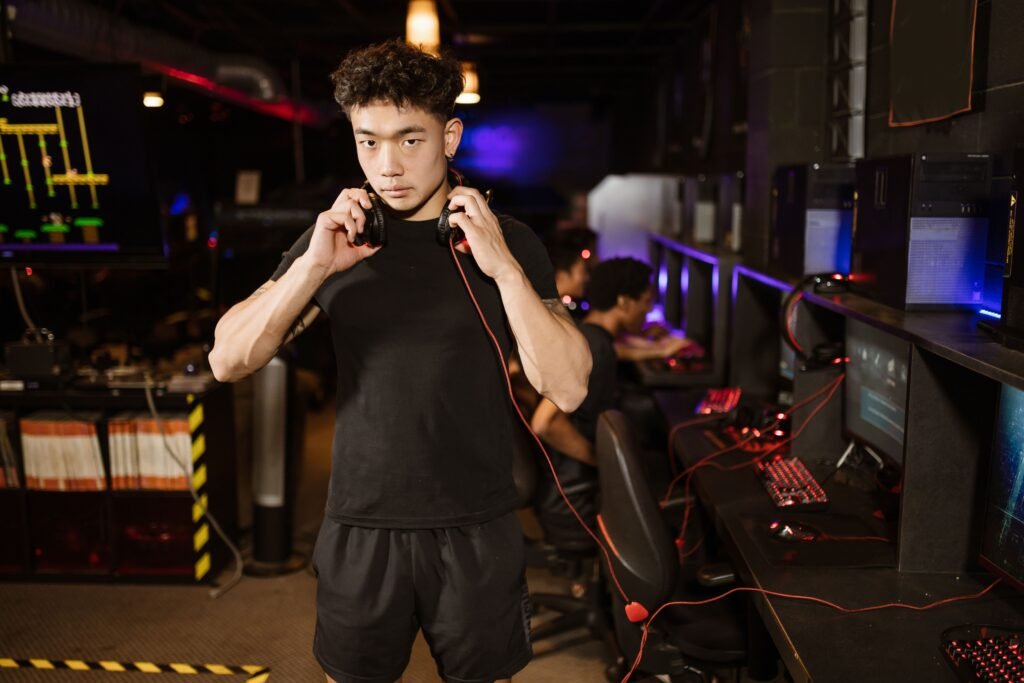
Teamwork and strategy are important skills in many areas of life. Whether you are playing football with friends, competing in an online multiplayer game, or participating in a professional esports tournament, success often depends on how well you communicate, make decisions, and work with others.
Sports and gaming may appear to be very different activities, but they share several important characteristics. Both require planning, practice, problem-solving, coordination, and the ability to adapt when situations change. Players must understand their roles, recognize opportunities, and make decisions under pressure.
For beginners, sports and video games can also provide enjoyable ways to practice these skills. A team sport can teach players to cooperate physically and communicate on the field, while a multiplayer game can encourage quick thinking, resource management, and coordinated decision-making.
In this guide, we will explore how sports and gaming can help develop teamwork and strategy, the skills they have in common, and practical ways to apply these lessons in everyday life.
1. Understanding Teamwork in Sports and Gaming
Teamwork means working together toward a shared goal. Instead of focusing only on individual performance, team members coordinate their efforts and support one another.
In football, for example, a player may pass the ball to a teammate who has a better chance of scoring. In basketball, players create space, defend together, and coordinate their movements to improve their chances of winning.
The same principle applies to multiplayer video games. In team-based shooters, players may choose different roles, share information about opponents, and protect teammates during difficult situations. In strategy games, players may coordinate resources, plan attacks, or defend important objectives together.
Effective teamwork requires more than simply being on the same team. Players need to understand their responsibilities, respect their teammates, communicate clearly, and remain focused on the shared objective.
These experiences can encourage people to recognize the value of cooperation rather than trying to do everything alone.
2. Communication: The Foundation of a Strong Team
Good communication helps team members understand what is happening and what needs to happen next.
In sports, communication may involve calling for a pass, warning teammates about an approaching opponent, or discussing a change in formation. Clear communication can reduce confusion and help players respond more effectively.
Online gaming also relies heavily on communication. Teammates may use voice chat, text messages, or built-in signals to share information. A player might identify an opponent’s location, request assistance, or tell the team when an objective is under threat.
However, effective communication is not about speaking constantly. Information should be clear, relevant, and timely.
For example, a short message such as “Opponent approaching from the left” is usually more useful during a fast-paced match than a long explanation.
Players can practice better communication by:
- Sharing important information clearly.
- Listening to teammates before making decisions.
- Avoiding unnecessary arguments during competition.
- Giving constructive feedback after mistakes.
- Staying respectful when teammates disagree.
These habits may also be useful in school projects, workplace discussions, and other group activities.
3. Learning to Trust Your Teammates
Trust is another essential part of teamwork. When players trust one another, they can coordinate their actions more confidently and focus on the team’s overall performance.
In a football match, a defender may move forward because they trust another player to cover the space behind them. In a multiplayer game, a player may protect an objective while relying on teammates to watch another area.
Without trust, players may hesitate, duplicate each other’s efforts, or ignore important responsibilities.
Trust develops through consistent behavior. Teammates build confidence in one another by keeping promises, communicating honestly, completing their assigned roles, and admitting mistakes.
It is also important to remember that trust does not mean assuming everyone will always make the right decision. Instead, it means creating an environment where teammates can learn, improve, and support one another.
In both sports and gaming, teams generally perform better when players understand that everyone is contributing toward the same goal.
4. Strategic Thinking and Planning Ahead
Strategy involves deciding how to achieve a goal by considering available resources, possible challenges, and the actions of others.
In sports, a coach may choose a defensive formation against a strong attacking opponent. A basketball team may change its approach when a key player is unavailable. These decisions require an understanding of the situation and a plan for responding to it.
Video games also offer many opportunities for strategic thinking. In real-time strategy games, players must manage resources, build units, and decide when to defend or attack. In tactical games, teams may need to select routes, coordinate abilities, and control important locations.
Successful strategies usually involve more than one possible outcome. Players must consider what might happen if their initial plan fails and prepare alternatives.
A useful way to practice strategic thinking is to ask three questions:
- What is our main objective?
- What resources and information do we have?
- What should we do if the situation changes?
Thinking through these questions can help players make more deliberate decisions instead of reacting without a plan.
5. Decision-Making Under Pressure
Sports and competitive gaming often require players to make decisions quickly. They may have only a few seconds to recognize a problem and choose an appropriate response.
A football player must decide whether to pass, shoot, or maintain possession. A basketball player may need to choose between attempting a shot and passing to an open teammate.
In a competitive video game, players may need to decide whether to engage an opponent, retreat to safety, defend an objective, or assist a teammate.
These decisions are influenced by several factors, including experience, available information, timing, and the possible consequences of each action.
Practice can help players become more comfortable with making decisions under pressure. Reviewing previous matches can also reveal whether a decision was effective and what could be improved.
The goal is not to eliminate every mistake. Instead, players can learn to recognize patterns, consider alternatives, and make better-informed decisions over time.
6. Understanding Roles and Responsibilities
Every team member has a role, and understanding that role can make cooperation more effective.
In sports, some players focus on defending, others create opportunities, and others concentrate on scoring. The exact responsibilities depend on the sport, formation, and match situation.
Team-based games also feature different roles. One player may specialize in support, another in defense, and another in dealing damage or controlling objectives. In strategy games, teammates may focus on gathering resources, exploring the map, or protecting the team’s base.
Problems can arise when players ignore their responsibilities or when several teammates try to perform the same task while leaving another task unattended.
Understanding roles does not mean players can never help outside their assigned responsibilities. Good teams adapt when circumstances change, but they do so while remaining aware of what the team needs.
Players can improve their role awareness by learning their responsibilities, understanding teammates’ strengths, and recognizing when additional support is necessary.
7. Adaptability: Changing the Plan When Necessary
Even a well-designed strategy can fail. An opponent may use an unexpected tactic, a key player may make a mistake, or the game situation may change suddenly.
Adaptability is the ability to recognize these changes and respond effectively.
In sports, a team may switch from attacking to defending when it takes the lead. A coach may change substitutions or tactics when the opposing team becomes more aggressive.
In gaming, a team might abandon an unsuccessful approach, change its equipment choices, or concentrate on a different objective. A strategy that works against one opponent may not work against another.
Adaptability requires players to observe what is happening rather than blindly following an original plan.
To develop this skill, players can review different match situations, experiment with alternative strategies during practice, and discuss how their team should respond to unexpected challenges.
Being adaptable also means accepting that changing a plan is not necessarily a sign of failure. Sometimes it is the most effective way to reach the goal.
8. Problem-Solving Through Practice
Problem-solving involves identifying a challenge, understanding its causes, and testing possible solutions.
In sports, a team may struggle to defend against a fast opponent. Players and coaches can analyze the problem, adjust their positioning, and practice different defensive approaches.
In video games, players may repeatedly lose control of an important area or struggle against a particular opponent. Rather than repeating the same actions, they can examine what went wrong and try a different approach.
A simple problem-solving process includes:
- Identify the problem clearly.
- Gather information about the situation.
- Consider possible solutions.
- Test one approach at a time.
- Review the results and make adjustments.
This process can make practice more productive because it focuses on learning rather than repeating mistakes without understanding them.
It also encourages players to remain patient. Some challenges require multiple attempts before an effective solution becomes clear.
9. Handling Mistakes and Learning From Failure
Mistakes are a normal part of sports and gaming. Even experienced players miss opportunities, misjudge situations, or make decisions that do not work out.
The important question is how players respond afterward.
Blaming teammates can damage trust and distract the group from finding a solution. Ignoring mistakes can also prevent improvement because the same problem may occur again.
A more productive approach is to identify what happened, understand the contributing factors, and decide what to practice next.
For example, a football player who frequently loses possession may need to improve their first touch or awareness. A gaming player who repeatedly gets caught out of position may need to improve map awareness or timing.
Constructive feedback should focus on actions that can be changed rather than personal criticism.
When teams treat mistakes as learning opportunities, players may become more willing to ask questions, try new strategies, and support one another through difficult matches.
10. Leadership and Shared Responsibility
Leadership is not limited to the captain of a sports team or the most experienced player in a gaming group. Different team members can demonstrate leadership by helping others, communicating clearly, and taking responsibility.
In sports, a captain may encourage teammates after a setback, help maintain discipline, or communicate with officials. A player may also demonstrate leadership by consistently working hard during practice.
In gaming, a team member might organize a strategy, explain a game mechanic to a beginner, or help the group remain calm during a difficult match.
Effective leadership includes listening to others and recognizing when someone else has a better idea. It does not require controlling every decision.
Shared responsibility is equally important. Every player should contribute to the team’s objectives rather than expecting one person to solve every problem.
When leadership and responsibility are distributed appropriately, teams can become more organized and resilient.
11. Sportsmanship, Respect, and Fair Play
Competition can create excitement, but it can also lead to frustration when things do not go as planned.
Sportsmanship means respecting opponents, teammates, officials, and the rules of the activity. It includes accepting results fairly, avoiding deliberate misconduct, and recognizing good performance from others.
The same principles apply to online gaming. Players should avoid harassment, cheating, abusive messages, and behavior that intentionally ruins the experience for others.
Respectful behavior supports a healthier competitive environment. It also makes teamwork easier because players are more likely to communicate openly when they do not fear being insulted for every mistake.
Winning is enjoyable, but competition can also be valuable because it provides opportunities to learn, challenge yourself, and appreciate other people’s skills.
Good sportsmanship reminds players that how they compete matters as well as the final result.
12. How to Practice Teamwork and Strategy in Everyday Life
The lessons from sports and gaming can be applied to other activities, including education, work, and personal projects.
Here are some practical ways to build these skills:
Participate in group activities. Join a sports team, play cooperative games, or take part in group projects where everyone has a shared goal.
Set clear objectives. Decide what the group wants to achieve and make sure everyone understands the target.
Assign responsibilities. Divide tasks according to individual strengths and make sure important responsibilities are covered.
Communicate regularly. Share progress, ask questions, and explain problems before they become more difficult to solve.
Review performance. After a project or match, discuss what worked well and what could be improved.
Stay flexible. Be willing to change your approach when new information becomes available.
Respect different perspectives. Team members may have different ideas, and discussing those ideas can help the group find better solutions.
These habits can help people become more organized and cooperative, regardless of whether they are playing a game or working toward a real-world objective.
13. Balancing Gaming, Sports, and Other Responsibilities
Sports and gaming can be enjoyable ways to practice teamwork and strategy, but balance is important.
Physical sports can provide opportunities for movement, coordination, and face-to-face interaction. Gaming can offer digital challenges, creative experiences, and online cooperation. Both can be part of a balanced lifestyle when approached thoughtfully.
Players should make time for sleep, physical activity, school or work, family, and other responsibilities. During gaming sessions, regular breaks can help reduce discomfort and eye strain.
It is also important to choose activities that suit your interests and circumstances. Not everyone enjoys the same sports or games, and skills develop at different rates.
The goal should be to enjoy the experience while building useful habits, rather than treating every activity as a test of personal ability.
Frequently Asked Questions
Can video games improve teamwork skills?
Team-based games can provide opportunities to practice communication, coordination, role awareness, and shared decision-making. The benefits depend on the game, the player’s behavior, and how they approach teamwork.
How do sports teach strategic thinking?
Sports require players to evaluate opponents, understand available space, choose tactics, and adapt to changing situations. Training and match experience can help players recognize patterns and make more informed decisions.
What is the difference between teamwork and strategy?
Teamwork is about cooperating with others to achieve a shared goal. Strategy is the plan used to reach that goal. Effective teams generally need both.
Are sports better than gaming for developing teamwork?
Neither is automatically better in every situation. Sports can provide physical coordination and in-person interaction, while multiplayer games can develop digital communication and game-specific decision-making. The value depends on the activity and how people participate.
Can gaming help develop leadership skills?
Team-based gaming may provide opportunities to practice organizing a group, communicating plans, supporting teammates, and responding to challenges. These experiences can be useful practice, although leadership skills also require application and learning in other settings.
Why is communication important in competitive activities?
Communication helps teammates share information, coordinate actions, reduce confusion, and respond to changing situations. Clear and respectful communication can make teamwork more effective.
Conclusion
Sports and gaming offer more than entertainment. Both can provide opportunities to practice teamwork, strategic thinking, communication, adaptability, problem-solving, and leadership.
From coordinating a football attack to planning a multiplayer gaming strategy, players learn that individual skill is only one part of success. Understanding teammates, making thoughtful decisions, and responding to challenges can be just as important.
These skills develop through experience, practice, reflection, and respectful cooperation. By learning from both victories and mistakes, players can become more effective teammates and more thoughtful competitors.
Whether you enjoy physical sports, competitive esports, or casual multiplayer games, focus on communicating clearly, supporting others, and improving one step at a time.
Visit Gamixy.info for more gaming guides, sports articles, helpful tips, and insights into the world of gaming and sports.